Lighting
Professional lighting design utilizing Ayrton, Robe, and Chauvet fixtures for precise atmospheric control.
Overview
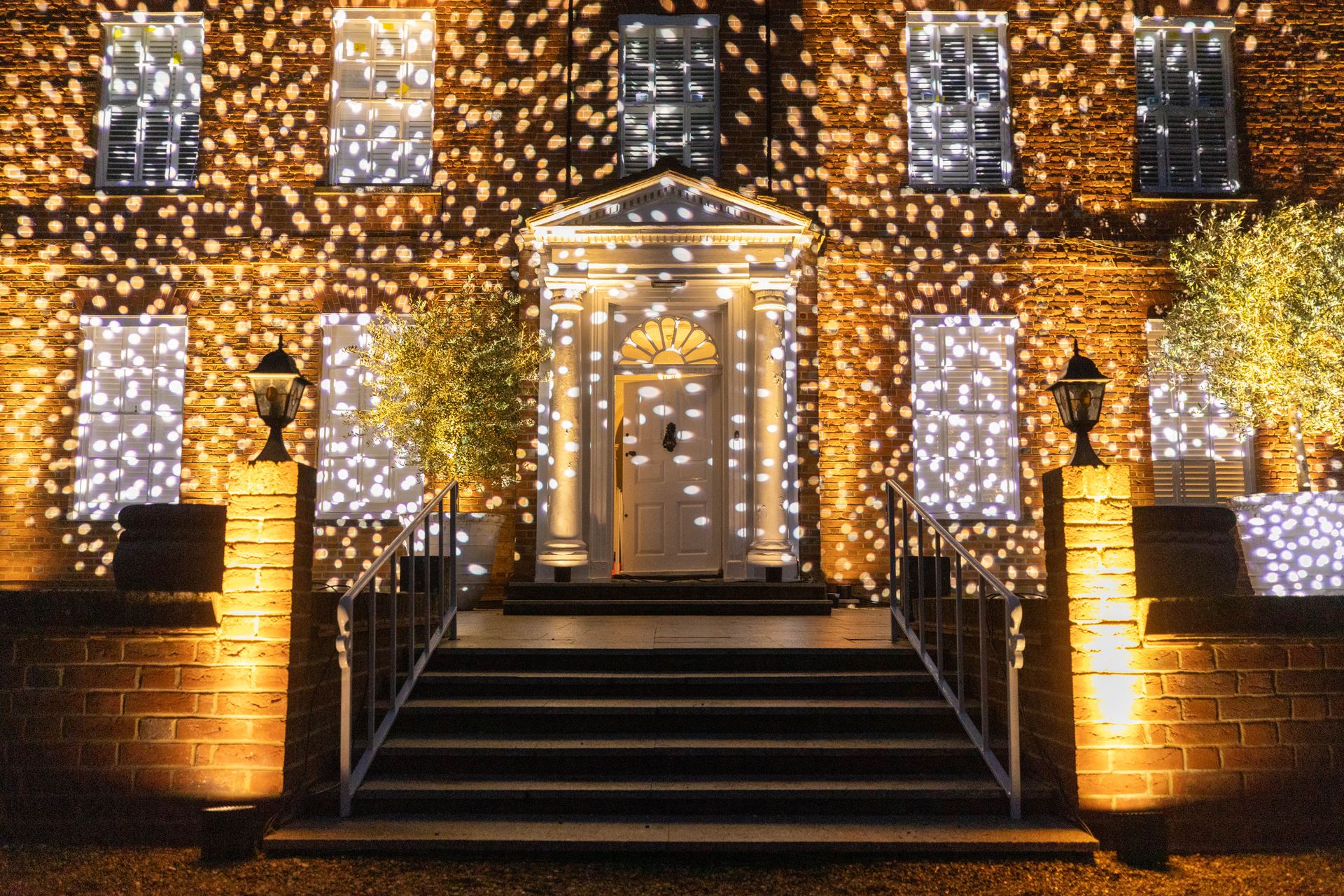
Our lighting design combines technical precision with creative vision to enhance your event's atmosphere. Using industry-standard fixtures from Ayrton, Robe, and Chauvet, controlled via Avolites and MA Lighting consoles, we create tailored lighting solutions that complement your event's aesthetic while ensuring optimal visibility and ambiance. From architectural uplighting to dynamic stage effects, each design is carefully programmed and executed.
Our experienced team has delivered lighting solutions for a wide range of events, from intimate corporate gatherings to large-scale productions. We understand that each event is unique, and we work closely with you to create solutions that align perfectly with your vision and objectives.
Our Approach
Stage Lighting
Moving head fixtures from Robe and Ayrton, with LED wash lights and profile spots for precise beam control and gobo projection. Comprehensive console programming for smooth show operation.
Architectural Lighting
IP-rated LED fixtures for building facades and outdoor spaces. RGBW color mixing capability with wireless DMX control for flexible deployment.
Intelligent Lighting
Latest-generation moving lights featuring CMY color mixing, rotating gobos, and advanced effects. Pixel-mapping capability for dynamic content integration.
LED Solutions
Energy-efficient RGBW LED wash fixtures and battery-powered wireless uplighters. Silent operation for noise-sensitive environments.
Control Systems
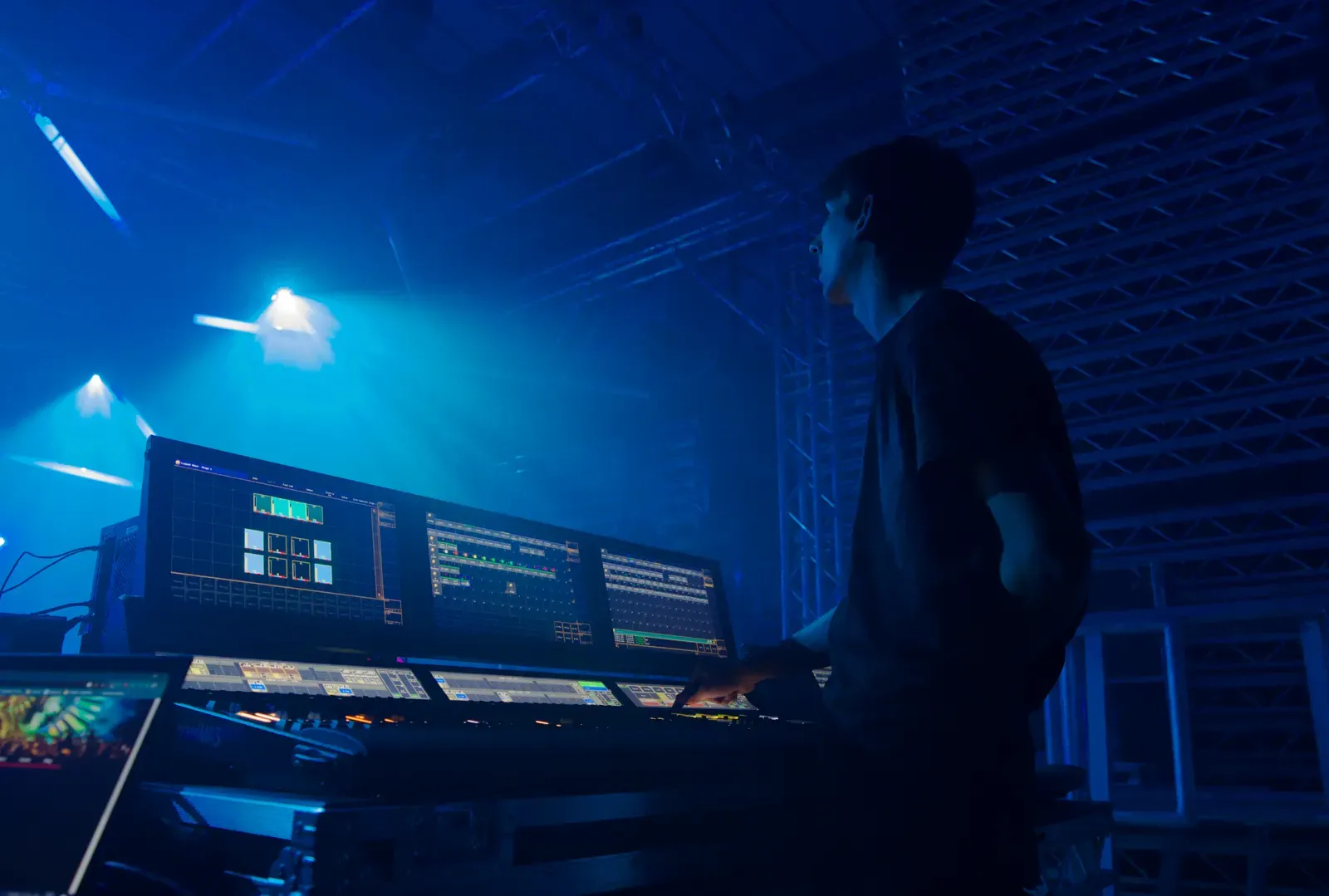
Avolites and MA Lighting consoles with backup systems. Network distribution via Art-Net and sACN protocols for reliable control.
How we design event lighting, and how to brief it
Lighting is the line on a production plan that changes a room the most and gets specified the least. This is the guide we wish every client read before their first site visit: what the fixture types actually do, how many you need, what the venue will and won't allow, and the mistakes we are asked to fix most often.
Start with the arc of the evening, not a fixture list
Every good lighting design answers one question first: what should the room feel like at each stage of the event? Arrival, ceremony or keynote, dinner, speeches, dancing and the last song each want a different state. We write those states down as a short list before choosing a single fixture, because the fixture list falls out of the states, not the other way round. A rig that only has one look all night is the most common sign that the brief was a shopping list.
- Arrival: warm, low, architectural. Facade or tree washes outside, uplighting inside, nothing on the guests' faces.
- Ceremony or keynote: focus. A small number of profiles on the people who matter, everything else dropped two stops.
- Dinner: flattering and even. Pin spots on tables and florals, candles doing most of the work, uplighting at 30 to 40 percent.
- Speeches: a single, soft key light on the speaker position so photographs and video are usable.
- Dancing: movement and contrast. Moving heads, colour, haze if the venue allows it, and the room level pulled down so the dance floor reads as the brightest thing.
The four fixture families, in plain English
| Family | What it does | Typical use | Power and control |
|---|---|---|---|
| Uplighters and wash PARs | Colour the walls, pillars and marquee lining | Every room; the single biggest transformation per pound | Battery models such as the Astera AX5 run all evening with no cables; mains LED PARs draw around 40 to 60 W each |
| Profiles and pin spots | Shape a beam precisely: a table, a cake, a speaker, a logo gobo | Dinners, ceremonies, keynotes, monograms on stone or floor | Profiles such as the Ayrton Diablo need a rigging point or a stand; pin spots are small and battery options exist |
| Moving heads (beam, spot, wash) | Movement, colour change and effects on cue | Dance floors, stages, reveals | 300 to 500 W each, need a console and an operator, fan noise varies by model; the Martin MAC One is our quiet-room choice |
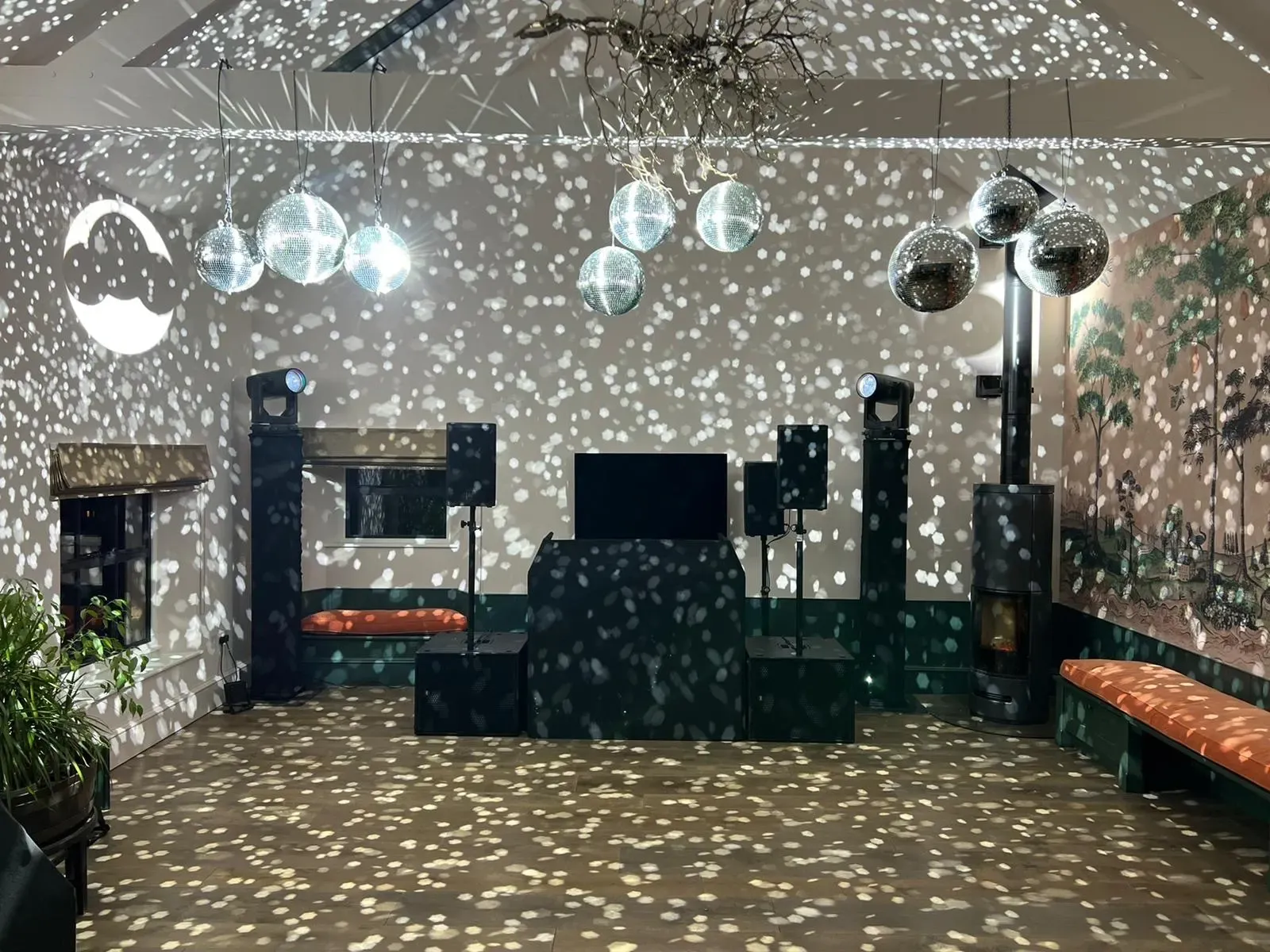
| Linear and decorative | Lines and texture: LED tubes, battens, festoon, mirror balls | Bars, booths, marquee ceilings, garden paths | Battery tubes such as the Astera Titan go anywhere; festoon needs a rigging plan and outdoor-rated power |

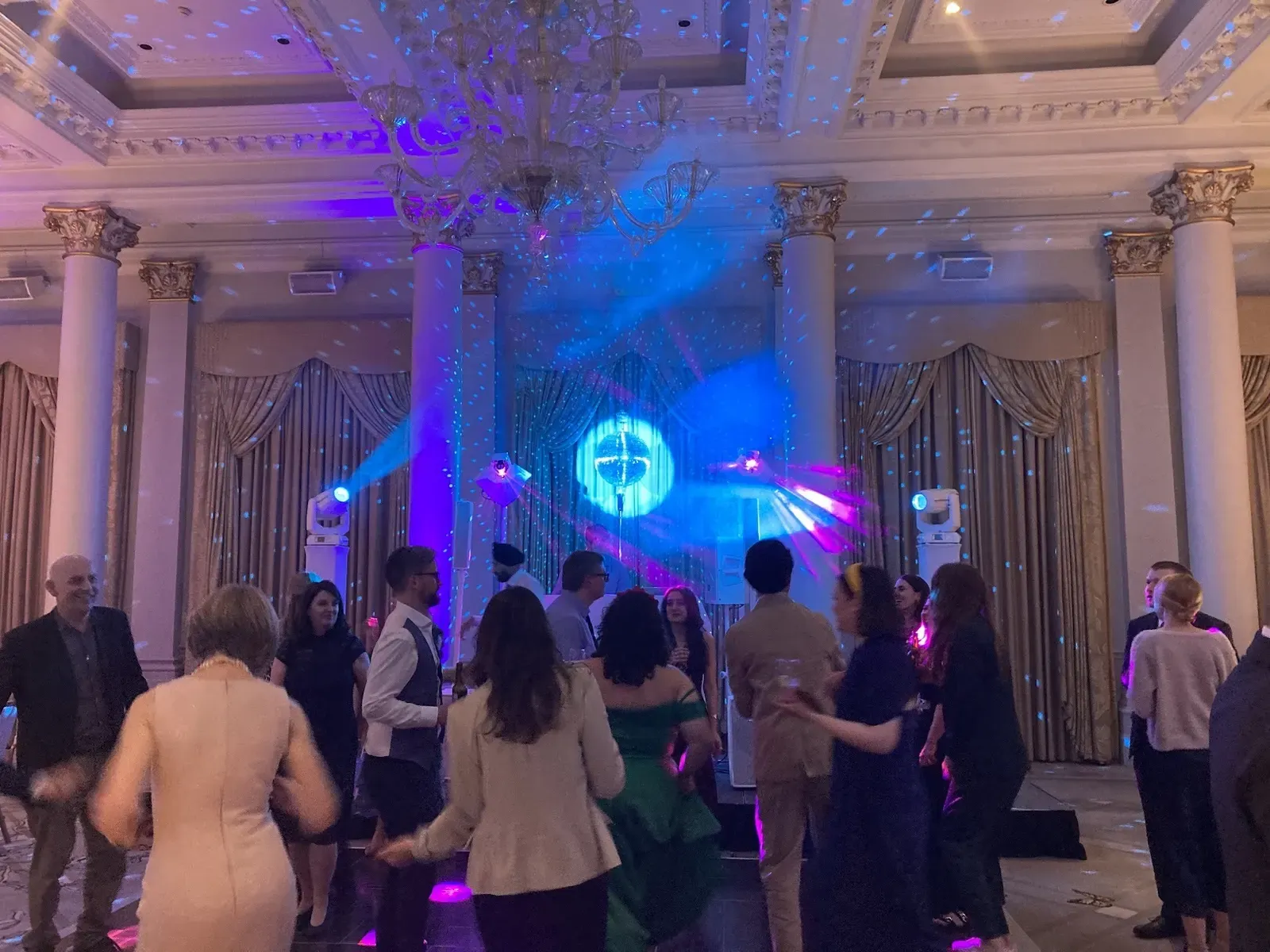
If the budget only stretches to one family, choose uplighting. Twenty controlled PARs change a country-house dining room more than any other single spend, and they are the fixtures guests notice in photographs.
How many fixtures a room needs
These are the planning figures we use before a site visit. They assume a typical hotel ballroom or country-house room with 3 to 4 metre ceilings and pale walls; dark panelling, mirrors and very high ceilings all push the numbers up. We always count against a floor plan before quoting.
| Room or moment | Uplighters | Pin spots or profiles | Moving heads | Notes |
|---|---|---|---|---|
| Dinner for 80 to 120 in one room | 12 to 16 | 1 per table | 0 to 2 | Pin spots matter more than colour here |
| Dinner for 150 to 250 in a ballroom | 20 to 30 | 1 per table plus 2 for the top table | 4 for the dance floor | Add 2 profiles for speeches |
| Marquee, 15 m by 30 m | 24 to 36 on the lining | 1 per table | 6 to 8 | Battery fixtures avoid cable runs across guest areas |
| Dance floor only, 100 guests | 6 to 8 around the floor | None | 4 to 6 | A mirror ball and two pin spots often do more than two extra movers |
| Keynote stage, 200 seats | 8 to 12 for the room | 4 to 6 profiles for key and fill | 4 to 8 for looks | Key light first; nobody remembers the colour wash if the speaker was in shadow |

Colour temperature, and why photographers care
Warm white in the 2700 to 3200 K range flatters skin and matches candles and tungsten table lamps. Cool white above 4000 K reads clinical in photographs and fights the room. Most of our decorative washes sit at amber and warm white during dinner and move to saturated colour only once the dance floor opens. If a photographer or videographer is booked, we ask for their preferences early and keep the key light for speeches at a steady warm white with a high colour rendering index, because a flickering or heavily coloured key light is the one thing post-production cannot fix.
What the venue will allow: power, rigging, haze
- Power: an LED rig for a 200-guest dinner and dance floor draws less than a domestic kettle circuit would suggest, usually 3 to 6 kW in total, but it needs to be on its own circuits away from catering. In marquees and gardens we specify generator power with the sound and catering loads combined; see the power and noise guide for garden parties.
- Rigging: hotels and heritage venues rarely allow anything fixed to the fabric. We use freestanding truss, base plates and stands, or battery fixtures that need no rigging at all. Where a venue has certified rigging points we ask for their load documentation before designing around them.
- Haze: moving-light looks depend on haze to show the beams, and haze triggers smoke detectors. Venues either permit a supervised isolation of specific detectors, with a fire-watch, or they do not. We confirm this in writing before promising a beam-heavy dance-floor look.
- Listed interiors: no tape on painted surfaces, no fixtures touching stone or plaster, cable ramps on every route across a floor, and a strike that leaves the room as found. Battery fixtures were made for these rooms.
The five mistakes we fix most often
- One look all night. The room is lit for dancing at 6 pm and guests eat dinner in nightclub colours.
- No key light for speeches. The father of the bride gives the speech of his life in silhouette and the video is unusable.
- Uplighters placed by a caterer at 5 metre spacing, so the walls have scallops of colour with dark gaps between them.
- Cool-white LED house lights left on because nobody asked the venue how to dim them. We ask at the site visit and often bring a small dimmer for the venue's own lamps.
- Moving heads with no operator, running a built-in chase. A lighting operator on the night costs less than two extra fixtures and makes the entire rig look intentional.

Lighting for weddings and country houses in Surrey and Berkshire
Most of our wedding lighting work is in country houses and marquees across Surrey and Berkshire, where the brief is usually the same: make a large, formal room feel warm at dinner and alive by 10 pm without a visible rig. Battery uplighting along the walls, pin spots on tables, festoon over the terrace for the transition outside, and a compact moving-light package over the dance floor is the pattern. An operator runs the changes to the running order, so the shift from dinner to dancing happens in a minute rather than as a lights-off, lights-on moment.
How to brief us
- The venue and the rooms you are using, with any floor plans you have.
- The running order, even a rough one, with the moments that must land.
- Photographs of the room in daylight and, if you have them, at night.
- Anything the venue has told you about power, rigging, candles or haze.
- Your colour references: a mood board, a brand guideline, a dress swatch. We match to them rather than to a preset.
From that we produce a lighting plan on the floor plan, a fixture list you can compare against other quotes, and a state list for the evening. If you would rather hire the fixtures and run them yourself, our lighting hire catalogue lists the same kit with day rates, and the Astera range covers most cable-free jobs.
Questions we get asked
How many uplighters do I need for a room?
Plan for one every 2 to 3 metres of wall for an even wash. A 150-guest dinner room usually takes 16 to 24, a large marquee 24 to 36. Dark walls, mirrors and high ceilings push the count up; we confirm against a floor plan before quoting.
Do I need a lighting operator, or can the lights run themselves?
Static looks such as uplighting and pin spots can run unattended once set. Anything that changes with the evening, and any moving-light package, is worth an operator so the changes happen with the running order rather than on a timer.
Can you use haze or smoke in a hotel or listed building?
Only with the venue's written agreement to isolate the relevant detectors under supervision. Many hotels allow it with a fire-watch, many heritage venues do not. We design a beam look that works without haze when the venue says no.
What colour should the lighting be for photographs?
Warm white, 2700 to 3200 K, for anything involving faces: arrival, ceremony, dinner and speeches. Saturated colour belongs on walls and the dance floor, after the formal photographs are done.
Featured Projects
Let's Create Something Extraordinary
Whether you have a specific vision in mind or need guidance in creating the perfect lighting solution for your event, our team is here to help bring your ideas to life.
Discuss Your ProjectReady to bring your vision to life?
Let's discuss how we can help with lighting